
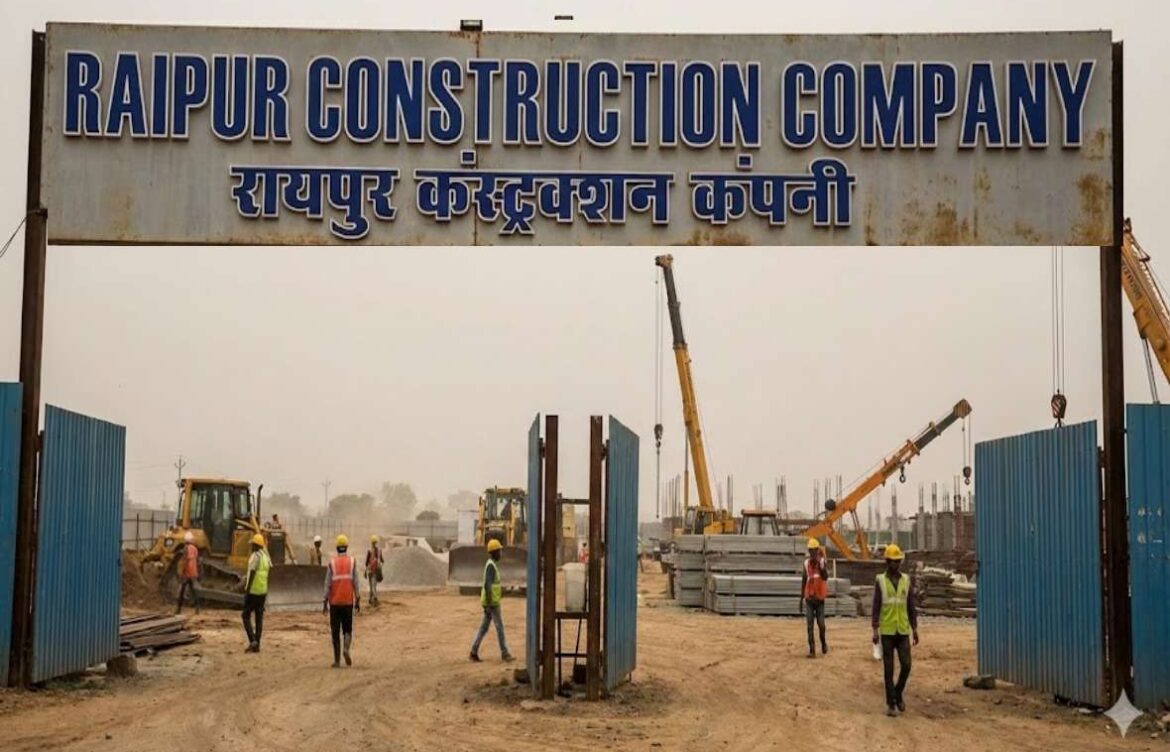
Construction Company In Raipur
The Raipur construction sector is a major engine of economic activity in Central India, reflecting the city’s status as a capital and a growing regional hub.
– The industry here is characterized by a mix of heavy industrial projects, large-scale infrastructure, and rapidly expanding residential and commercial real estate. Its trajectory is closely linked to the region’s larger development goals, which include the creation of new industrial clusters, the expansion of urban services, and the development of the nearby planned capital city.
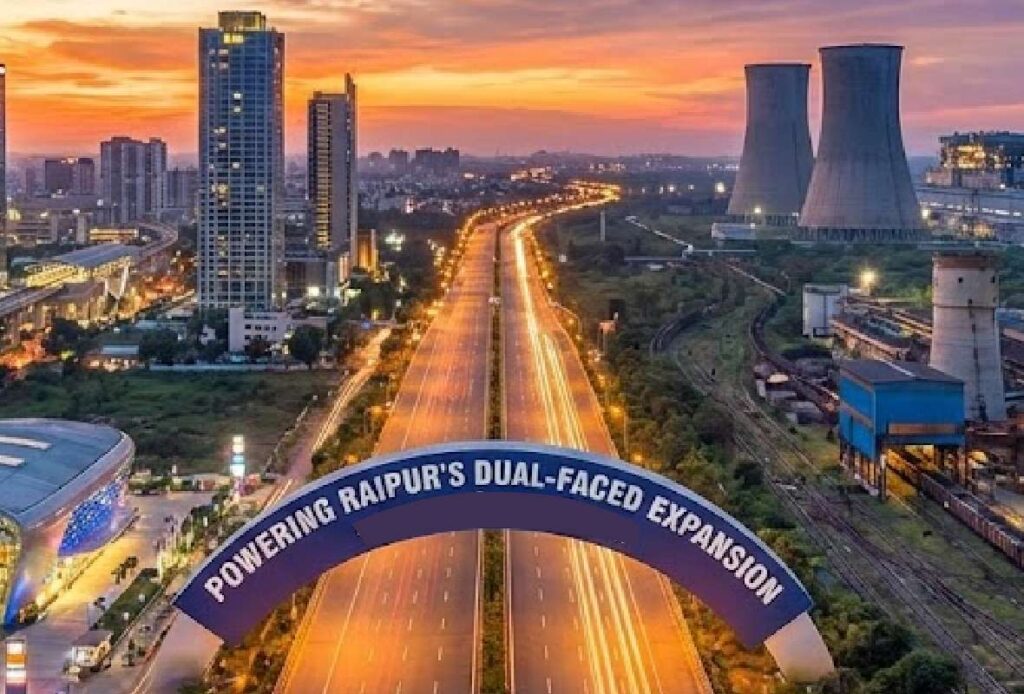
Powering Raipur’s Dual-Faced Expansion
The construction boom in Raipur isn’t a single, uniform wave; it’s a dynamic, dual expansion, and contractors are at the center of both fronts.
The first is development and redevelopment within the city’s defined boundaries.
– This includes infill projects, the construction of new commercial complexes, and the expansion of residential colonies.
– Hundreds of apartment projects and housing developments are being built simultaneously, so the demand for reliable residential contractors is at an all-time high.
**Second,** :: Perhaps more significant, is the massive “Nava Raipur Atal Nagar.” Planned as India’s first integrated smart and eco-friendly city.
– This massive greenfield project operates under its own stringent development regulations. Building contractors working in Raipur must possess a high degree of professionalism, technological know-how, and the ability to complete large projects that adhere to world-class standards for sustainability and infrastructure.
– In both cases, the contractor is the operational commander, transforming the vision of the architects and investors into a physical structure.
Beyond Bricks and Mortar: The Full Scope of Services
One misconception is that a building contractor only manages labor and materials. In reality, their role is that of a comprehensive project manager.
– When you hire a professional building contractor in Raipur, you’re responsible for a variety of complex services all in one place:
**Project Planning and Management :: This involves creating realistic timelines, budgeting, and coordinating between all stakeholders, from architects and structural engineers to subcontractors and suppliers.
– Procurement and Logistics :: In a busy market like Raipur, procuring high-quality steel, cement, aggregate, and finishing materials—and delivering them to the site on time—is a major logistical challenge that contractors manage.
– Labor and Site Management :: They’re responsible for hiring and managing all skilled and unskilled labor, ensuring safety protocols are followed, and maintaining a productive and safe construction site.
– Quality Control :: A contractor is responsible for ensuring that every stage of the building, from foundation curing to the final coat of paint, meets the required specifications and quality standards.
– Financial Oversight :: They manage the project’s cash flow, make payments to suppliers and labor, and work to prevent costly budget overruns that can derail a project.
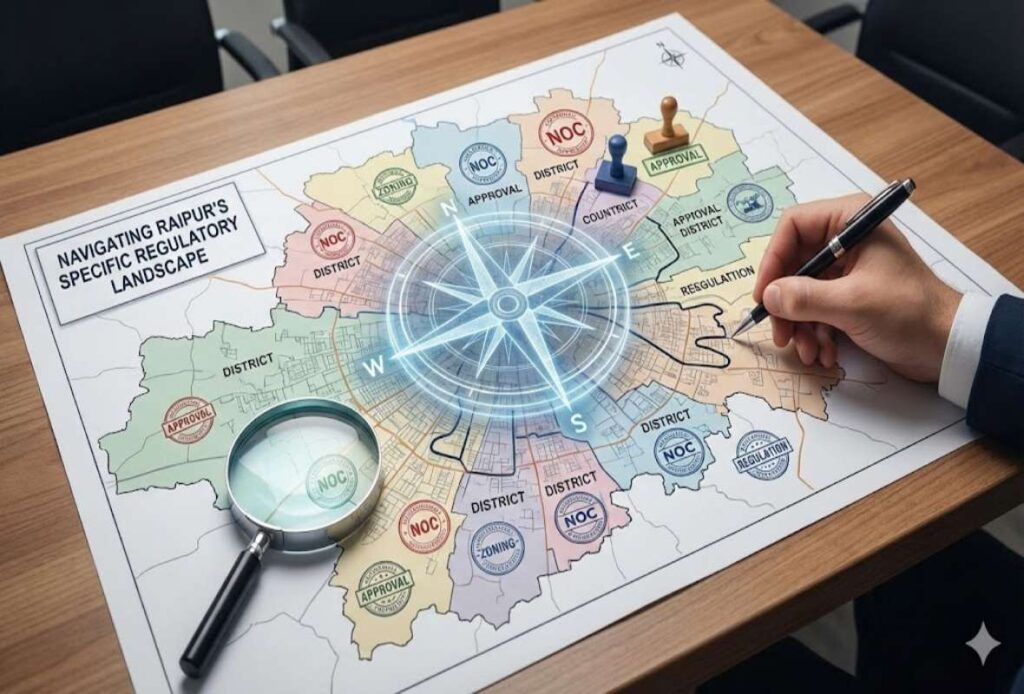
**Understanding Raipur’s Unique Regulatory Environment**
This is where a professional local contractor provides valuable, specialized expertise.
– Construction in Raipur takes place under a specific regulatory framework, and understanding it is a contractor’s primary responsibility. The success of a project often depends on it.
**Key responsibilities in this area include**
Permit Obtaining :: A contractor must be well-versed in the processes of the two main local authorities: the Raipur Municipal Corporation (Nagar Nigam Raipur) for intra-city projects and the Naya Raipur Atal Nagar Vikas Pradhikaran (NRANVP) for new cities.
**Familiarity with Online Systems ::** Both authorities have moved to online building permit systems.
– An experienced contractor understands how to prepare and submit the complex digital documents required for approval.
– Complying with local bylaws: Ensuring that design and construction adhere to all local building codes, setback regulations, and height restrictions. Managing special tasks: This includes understanding and managing financial and environmental requirements, such as labor cess payments and submitting FDRs (Fixed Deposit Receipts) required for rainwater harvesting systems, as determined by local authorities.
- No Comments
- November 28, 2025